





LAMINATION MODERNISATION AT Z STUDIO: FOLIANT POLLUX 760 SF WITH PALLET HANDLING
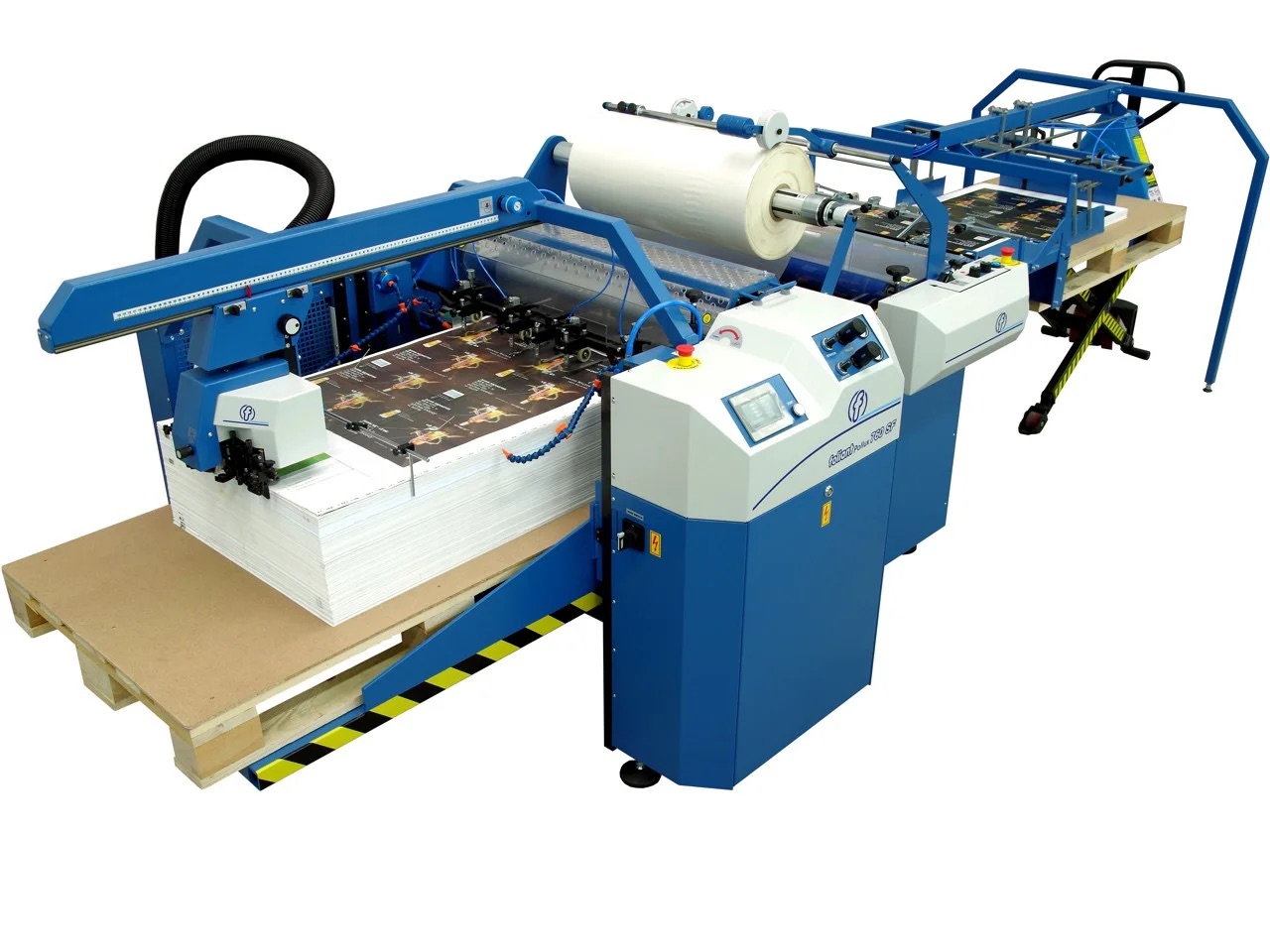
We have completed the installation of a new FOLIANT Pollux 760 SF industrial laminator at Z STUDIO. The new system replaces the company’s previous Komfi Amiga 52 and, with its pallet feeder and pallet stacker, provides a higher level of automation, greater format flexibility and a smoother flow of jobs through production.
The upgrade reduces the amount of manual sheet handling, makes the operator’s work easier and creates the right conditions for processing larger volumes while maintaining consistent lamination quality.
Z STUDIO: comprehensive services from printing to fulfilment
Z STUDIO has been active in the market for 36 years and currently operates approximately 5,000 m² of production space with a team of 140 employees. The company offers a broad range of services, including printing, packaging production, technical translations, fulfilment, warehousing and dedicated solutions for industrial customers.
Its portfolio includes manuals, labels, folding cartons, transport packaging, corporate and promotional printed materials, sleeves, paper bags, gift packaging and book production.
Such a wide range of jobs brings different requirements in terms of formats, substrates, finishing and processing speed. Z STUDIO therefore continues to modernise its production and invest in technologies that offer not only higher performance but also flexibility and better integration between individual production stages.
From the Komfi Amiga 52 to an industrial FOLIANT solution
The existing Komfi Amiga 52 laminator has been replaced by the significantly more powerful industrial FOLIANT Pollux 760 SF. The new technology expands the range of sheet formats that can be processed while automating both feeding and delivery.
The Pollux 760 SF is a robust single-sided industrial laminator designed for production environments. It can process sheets up to 76 × 110 cm and paper weights ranging from 115 to 600 gsm. Its maximum operating speed is 50 metres per minute, with an output of up to 3,000 B1 sheets per hour.
These parameters make it suitable for a wide variety of applications, ranging from general commercial print to packaging and other products where lamination improves durability or enhances the final appearance.
Pallet feeding reduces manual handling
An important part of the installed configuration is the pallet feeder. Sheets do not have to be transferred manually to a conventional feeding table but can be fed directly from the pallet.
This solution is particularly beneficial when processing larger production volumes. It reduces the physical demands placed on operators, eliminates unnecessary handling steps and ensures a smoother supply of material to the laminator.
Automatic feeding also contributes to stable production. Electronic sheet overlap control is managed by a PLC and servomotor. The overlap setting can be adjusted directly from the central touchscreen, even while lamination is in progress.
Precise lamination and controlled sheet transport
The lamination process takes place between a heated, highly polished chrome roller and a lower polyurethane pressure roller. Pneumatically controlled pressure helps maintain consistent conditions across the entire working width.
For lightweight sheets, the machine includes an adjustable system that reduces the risk of wrinkling before the sheets enter the main rollers. An adjustable decurling bar positioned after the lamination section helps prevent the sheets from curling after the film has been applied. Its intensity can also be adjusted while the machine is running.
The Pollux 760 SF can process BOPP polypropylene, nylon and PET films. A pneumatic film holder makes roll installation and replacement easier and more accurate. The system also includes a perforator for subsequent sheet separation and a cutting knife that allows the film width to be adjusted before lamination.
Automatic separation and pallet stacking
After the film has been applied, the sheets continue to the integrated separator. A pair of high-speed rollers automatically separates the laminated sheets and prepares them for further handling.
In the installed configuration, a pallet stacker then receives and accurately stacks the finished sheets. This eliminates the need for continuous manual collection and stacking. Production can therefore continue more smoothly and with less operator intervention.
The combination of a pallet feeder, laminator and pallet stacker creates an integrated production system that automates material handling both before and after lamination.
Centralised control simplifies operation
The entire machine is managed by a programmable control system via a central touchscreen. From one location, the operator controls paper feeding, sheet overlap, temperature and the subsequent lamination and separation processes.
Clear graphical controls guide the operator through the individual steps and help reduce setup errors. The control system also monitors production and can stop the machine in the event of a feeding, lamination or separation problem.
Modernisation for a smoother production flow
The new FOLIANT Pollux 760 SF provides Z STUDIO with higher performance, a broader range of supported formats and materials, and a significantly greater level of automation.
However, the most important benefit is not only the speed of the laminator itself. Pallet feeding and stacking make the entire material flow more efficient, reduce the physical demands placed on the operators and help maintain consistent quality even when processing high-volume jobs.
We are delighted to have supported Z STUDIO with this modernisation and to have supplied a solution that meets the requirements of a modern production environment.